
The Plate Method: Eat Well Without Overthinking It

One of the most important aspects of making lifestyle changes and building new habits is taking a sustainable approach. Not the trendy diets or workout fads of the moment, but a process that feels doable now and into the future. In our practice, we’ve observed that having a structure of some form is really important for patients success, especially when getting started. A process, strategy, or system to implement that is flexible, but offers guidelines. A common one we share for making changes to nutrition is called the Plate Method.
Plate Method
If you’re new to Summerfield, let us introduce you to a tool we use with many of our patients: the Plate Method. It’s a straightforward, customizable way to build a meal that satiates hunger, balances blood sugar, and provides adequate macro and micronutrients. With this tool, the possibilities for delicious, nourishing meals are endless!
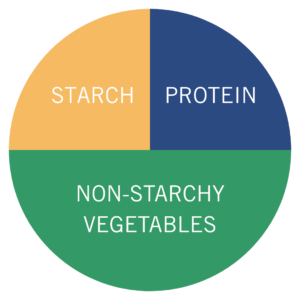 The plate is divided into 3 sections. The first quarter is for starches, including grains, starchy vegetables, beans, and fruits. The second quarter is for proteins, including meat, fish, eggs, certain dairy products, and plant proteins such as tempeh, tofu, seitan, lentils, and legumes. The final half is for non-starchy vegetables, including broccoli, carrots, cauliflower, green beans, bell peppers, lettuce, spinach, and many other vibrantly colored vegetables. With the Plate Method, these components can be prepared together or separately, eaten raw or cooked, fresh or leftover. This versatility enhances sustainability!
Benefits of balance: Starch/Carbohydrates
Before moving on to the “how”, let’s take a closer look at the “why” of building your plate with this framework, starting with starches, aka carbohydrates. These are our energy powerhouses, in that they break down most easily to provide fuel for our brain, muscles, and cells throughout the body. They keep our blood sugar levels stable and allow our liver to store extra energy to tap into between meals. As listed above, starches are found in a variety of food groups and can be simple to break down or more complex. Focusing on the more complex carbohydrates (i.e., starches over sugars) ensures we reap the broad benefits of fiber, including a more stable blood sugar response. If we eat high sugar choices often, we miss out on fiber and may end up eating more because our body burns through and stores it more quickly. Lastly, starches are important to protect the body from breaking down essential proteins and fats, which can happen when carbohydrate intake is too low.
Benefits of balance: Protein
Protein is made up of amino acids, which are the building blocks of muscles, tissues, hormones, and antibodies (think immune health), and play a role in other vital processes in the body. If we don’t get enough protein, the body will attempt to conserve and direct it only towards the most essential functions, taking it away from others. This can lead to imbalanced hormones, poor immunity, or a lack of muscle maintenance/development. To support adequate intake, consider incorporating a variety of protein sources, from both plants and animals, both of which have similar and different micronutrient benefits.
Benefits of balance: Non-starchy vegetables
Then we have non-starchy vegetables: fiber and antioxidant powerhouses! Adequate fiber intake supports digestive function and maintains a balance of healthy bacteria, which range in benefits from supporting our mood to synthesizing nutrients. Fiber also aids in blood sugar management. Many individuals fall short of the daily fiber recommendation, 25-38 grams/day for females and males, respectively. Veggies are a way to easily boost our intake! Similarly, eating a colorful array of plants ensures we reap the benefits of the antioxidants found in the different colors. Red produce provides lycopene, orange/yellow provides carotenoids, and green contributes sulforaphane, all of which aid in disease prevention. Striving to fill half your plate with colorful produce will deliver countless benefits for your body, head to toe.
Benefits of balance: Fats
While fats don’t have a specific section on the plate, they are often found in our protein-dense foods (especially meats) and used in cooking and preparation (oils, butter, cream, dressings, nuts, and seeds). Fats play an important role in satiety with meals as well as supporting hormone production, nutrient absorption (especially vitamins A, D, E, and K), and stabilizing blood sugar. Fats also enhance the flavor and texture of foods, adding to overall enjoyment.
Streamline your focus
We’ve detailed the framework and importance of each category, so the next step is application. When implementing dietary changes, it’s ideal to consider 1-2 areas of opportunity that feel most accessible. Maybe it’s starting to shop for more produce, so you have that available to build into daily meals. Or it could be planning your first meal of the day, so you aren’t scrambling and ultimately selecting something fast that doesn’t satiate your hunger or provide key nutrients. Consider for yourself, what is one area of opportunity that stands out where you could implement small daily actions to begin building momentum?
With more clarity on your action step, a great follow-up would be to consider the foods you enjoy within each section of the plate. This allows us to continue streamlining, so we have a smaller list of options and feel less overwhelmed when deciding “what am I going to eat?” If less is more for you, outline 5-10 foods in each section. If variety is your preference, aim for 10-15. Remember, this isn’t meant to limit you, but rather to provide structure to support balance as you build the habit. If you want to keep every single food on the figurative “table” as a possibility, by all means, go for it!
Simplify with a strategy
Now you need a strategy to begin bringing this list of fabulous foods to life. Are you a recipe person who prefers a full meal mapped out, with ingredients and steps to follow? Do you prefer quick, easy meals most of the time, with the focus on assembly, skipping the chop and prep stages? Maybe you’re somewhere in the middle – you don’t mind prepping, but you don’t want to be tied to a specific recipe and would rather utilize items you have on hand in various applications. There is no single best strategy; what matters is that you take the guesswork out in some way so that when the time comes, you can implement your process and create a delicious meal with ease.
If recipes are your thing, consider how this strategy will fit with your area of focus. Can you implement favorites as they are, or do they need some tweaking to optimize balance and variety? Would you like to expand your recipe repertoire to boost interest and enjoyment? If so, our Healthy Insights blog is a resource we share with patients to inspire and make it easier to build balanced meals. You might consider how many meals per week you’ll use a recipe, whether it will generate leftovers, and whether you want this to be your go-to strategy or just one approach.
For those who don’t love recipes or want to add a bit more ease to at least a few meals per week, the “quick and easy” concept is a favorite. Think of this as a “semi-homemade” approach, using quality convenience foods to reduce preparation time. A few ideas are listed below:
Chicken & Gnocchi
- Non-starchy vegetables: “slightly sauced” frozen steamable veggie bag
- Protein: rotisserie chicken
- Starch: store-bought gnocchi
Taco Bowls
- Non-starchy vegetables: frozen pepper/onion blend
- Protein: lean ground beef/beefless crumbles
- Starch: microwave rice and/or black beans
- Optional toppings: avocado, salsa, guacamole, shredded lettuce, or cabbage
Spaghetti & Meatballs
- Non-starchy vegetables: frozen/fresh zucchini noodles
- Protein: turkey meatballs with marinara sauce
- Starch: spaghetti noodles or a slice of bread
Classic Chicken Dinner
- Non-starchy vegetables: steamable veggie bag (such as broccoli, cauliflower, and carrots)
- Protein: baked chicken breast
- Starch: roasted or air-fried baby potatoes
Thai Peanut Wraps (vegetarian)
- Non-starchy vegetables: shredded cabbage/coleslaw blend
- Protein: shelled edamame and chopped peanuts
- Starch: whole-grain tortilla
- Optional toppings: premade peanut sauce, cilantro, green onions
If there is a section of the plate that you have the most trouble fitting in, consider relying on convenience foods more often for this section. For example, steamable veggie bags, salad greens, baby carrots, and pre-chopped broccoli are ways to simplify the increase in non-starchy veggies while keeping prep and cook time short. If protein is a bigger sticking point, turn to frozen chicken breasts, rotisserie chicken, prepared meatballs, pre-marinated pork or turkey tenderloin, salmon burgers, and frozen edamame as protein options that are quick to make and can often be repurposed for more than one meal. This strategy can be great for make-ahead lunches or fast family dinners to ensure balance while saving time.

Then we have a Summerfield creation called “mix and match” meal planning. To bring this concept to life, refer to the list of foods you enjoy within each section of the plate to help inspire delicious ways to combine them, focused on the cuisine or method.
This example shows the starches outlined in yellow, protein in blue, and non-starchy veggies in green. To create a meal with Latin flavors, we’ve included ideas for sauces, spices, and toppings along the bottom. Whether it’s a skillet dish, sheet pan meal, or something else, this framework allows the flexibility to work with what you have and what you enjoy. Other examples to apply this tool include salads, stir-fries, soups, omelets, Italian dishes, Indian dishes, Mediterranean meals, and more!
How a dietitian can help
This article included many options for inspiration, though most often, customized support helps to shift ideas into action.
Many of our patients have found it helpful to work together in their 1:1 appointments to build out their own custom meal plan. A Summerfield dietitian partners with you, ensuring all aspects of your life are taken into consideration: the foods you enjoy, cooking skills, family needs, dietary restrictions, time constraints, building a grocery list, and a streamlined meal prep strategy. If this type of support sounds beneficial on your journey to nourishing well in the new year, contact us today!
